Key Points:
- Structural Integrity is Paramount: Building a backyard pergola attached to your house requires precise ledger board installation to prevent catastrophic water damage and ensure the structure can handle St. Louis wind and ice loads.
- Seamless Architectural Extension: A properly designed attached pergola should look like an original part of your home’s architecture, not a disjointed afterthought, requiring careful matching of rooflines, fascia, and materials.
- Professional Design-Build Advantage: Hiring design build experts ensures that complex engineering, municipal permitting, and premium aesthetic details are handled cohesively, saving you from costly DIY mistakes.
Turning Your Patio into a Functional Outdoor Living Space
For many St. Louis homeowners, the patio is the most underutilized space on the property. When the summer sun beats down or a light spring drizzle begins, an exposed concrete slab quickly becomes uncomfortable. You might be dreaming of an outdoor sanctuary where you can host family dinners or simply relax with a book, but the thought of a freestanding structure feels disconnected from your daily living space.
Building a pergola attached to the house is the ultimate solution for bridging the gap between indoor comfort and outdoor beauty. However, this is not a simple weekend project. Attaching any structure to your home’s exterior involves complex structural engineering and waterproofing challenges. By the end of this guide, you will understand the critical differences between a DIY kit and a custom-built architectural extension. If you are ready to transform your patio into a true outdoor room, we invite you to explore how our design build firm can bring your vision to life safely and beautifully.
Why Choose a Backyard Pergola Attached to a House?
The primary advantage of an attached pergola is the creation of a transitional living space. Unlike a freestanding gazebo at the far end of the yard, an attached structure feels like an immediate extension of your home’s footprint. This proximity makes it incredibly convenient for outdoor dining, entertaining, and extending your usable square footage without the massive investment of a full room addition.
Furthermore, an attached pergola provides immediate architectural interest to flat, uninspired rear elevations. By adding vertical elements, decorative rafters, and custom end-cuts, you introduce depth and character to your home’s exterior, significantly boosting curb appeal.
The Critical Importance of the Ledger Board
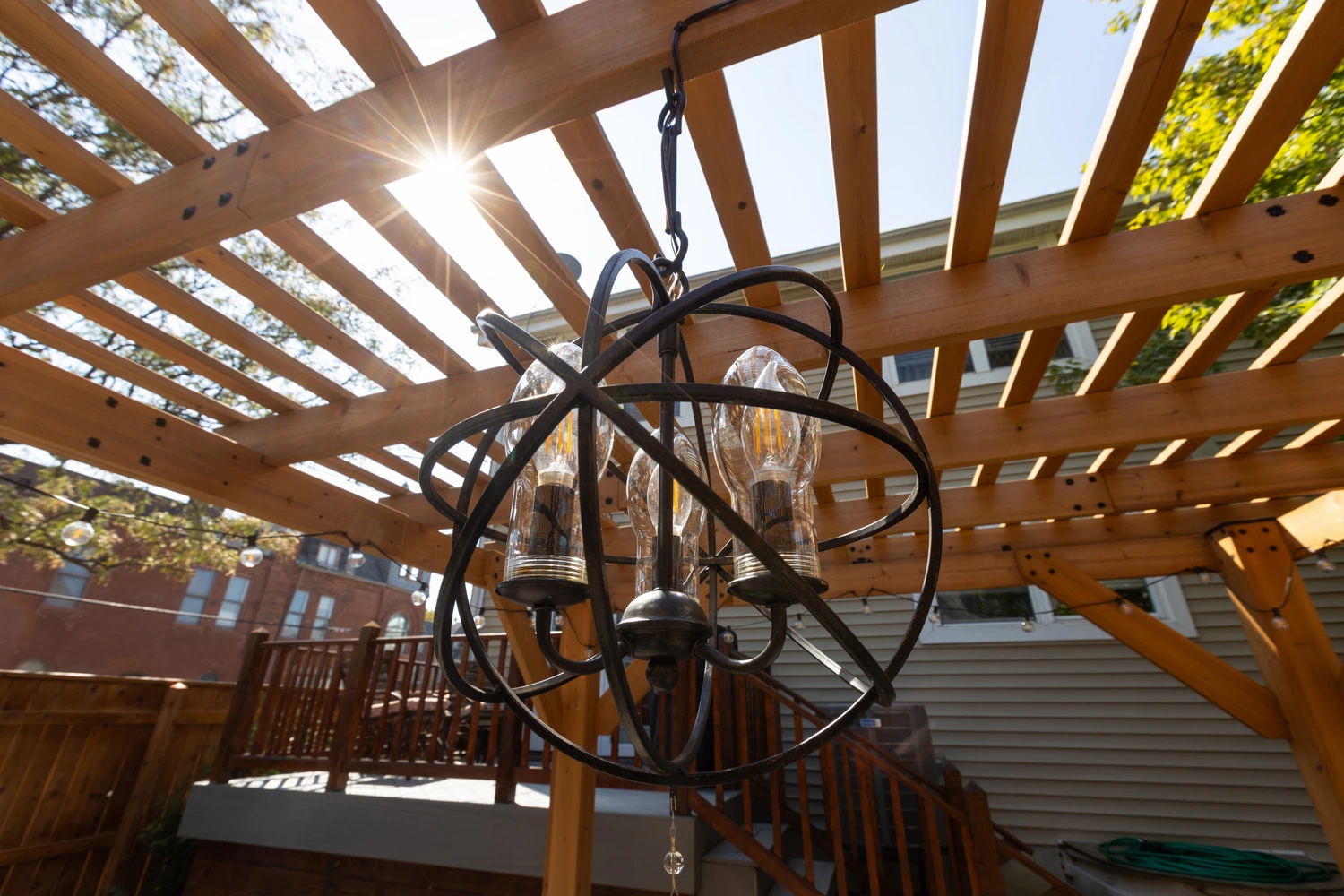
When building a pergola attached to the house, the single most important component is the ledger board. This is the horizontal piece of lumber bolted directly to your home’s framing, which supports the entire weight of the pergola roof on that side.
If a ledger board is installed incorrectly, the consequences are severe. A poor installation can compromise the structural integrity of the pergola, making it susceptible to collapse under heavy snow or ice loads—a real concern during St. Louis winters. More insidiously, improper flashing around the ledger board allows water to seep behind your siding, leading to hidden rot, mold, and catastrophic damage to your home’s structural framing. Design build experts understand the precise flashing techniques and structural requirements necessary to ensure a watertight, permanent connection.
Choosing the Right Materials for the St. Louis Climate
The longevity of your backyard pergola attached to the house depends entirely on the materials you select. St. Louis experiences dramatic temperature swings, high humidity, and significant freeze-thaw cycles.
| Material | Aesthetic Profile | Durability in St. Louis Climate | Maintenance Requirements |
|---|---|---|---|
| Western Red Cedar | Classic, warm, natural beauty. | Excellent natural resistance to rot and insects. | Requires periodic staining or sealing to maintain color. |
| Powder-Coated Aluminum | Sleek, modern, clean lines. | Impervious to rust, rot, and warping. | Virtually zero maintenance; easily washable. |
| Composite/Vinyl | Traditional painted wood look. | Highly resistant to moisture and decay. | Low maintenance; occasional power washing. |
| Custom Steel | Industrial, robust, architectural. | Incredible strength for large spans; requires proper coating. | Low maintenance if properly galvanized and powder-coated. |
Navigating Permitting and Local Building Codes
Attaching a structure to your home almost always requires a building permit in St. Louis and surrounding municipalities. Building codes dictate the size of the footings for the support posts, the spacing of the rafters, and the specific hardware required for the ledger board connection.
Attempting to bypass the permitting process with a DIY kit can result in hefty fines, forced removal of the structure, and significant issues when it comes time to sell your home. A professional design build firm handles all engineering drawings, permit applications, and municipal inspections on your behalf, ensuring total compliance and peace of mind.
Integrating Your Pergola with Complete Outdoor Living
A pergola rarely exists in isolation. The most stunning outdoor spaces integrate the overhead structure with the elements below and around it. When planning your attached pergola, consider how it will interact with your existing or planned hardscaping.
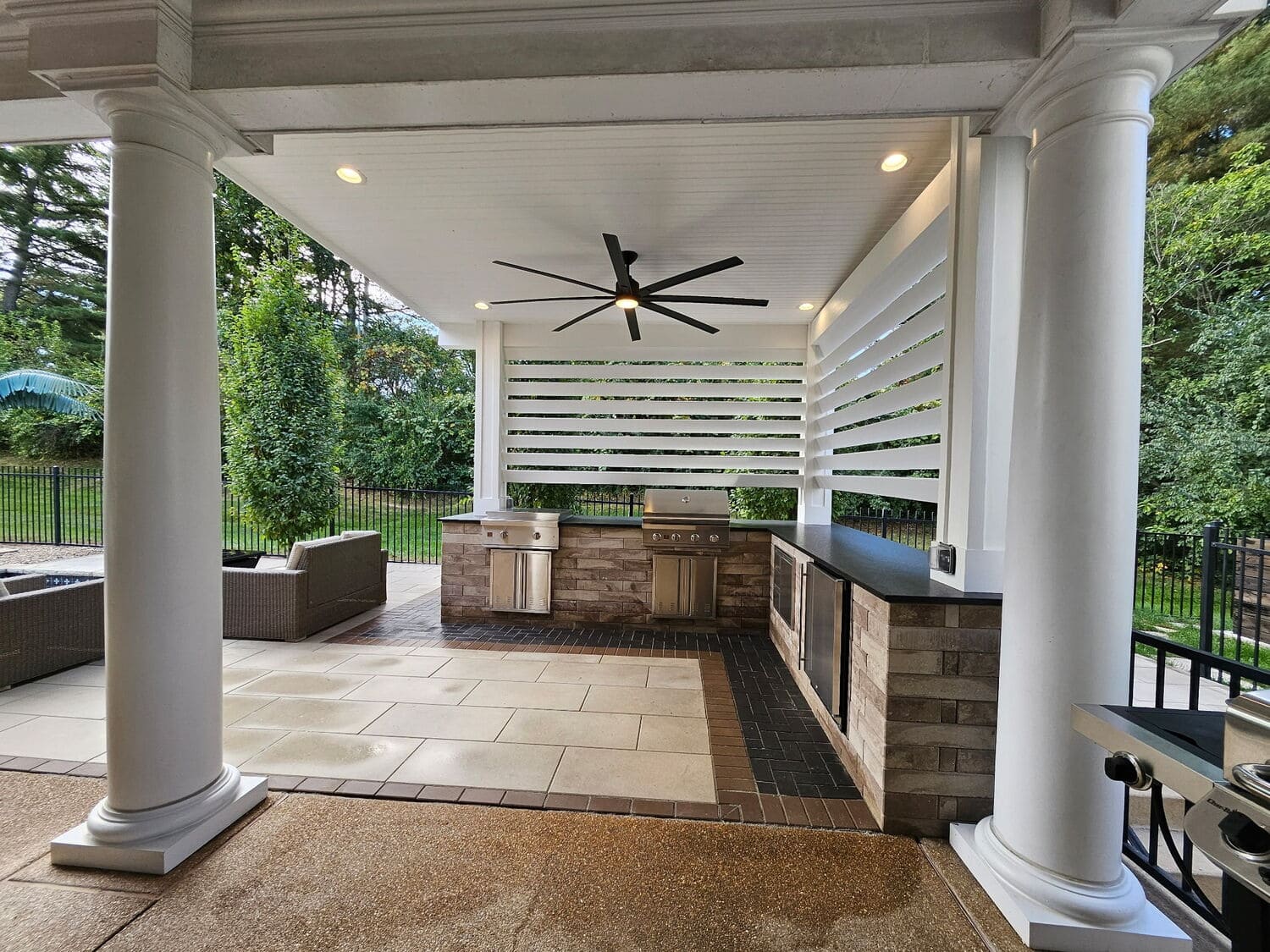
Will the support posts integrate into a new natural stone retaining wall? Do you need custom masonry columns to match your home’s exterior? Furthermore, an attached pergola is the perfect framework for low-voltage LED landscape lighting, outdoor ceiling fans, and integrated heating units. Planning these elements with design-build experts before construction begins ensures that all electrical conduits are hidden and the final result is seamless.
The Risks of DIY Versus Professional Installation
While the internet is full of tutorials on building a pergola attached to the house, the risks of a DIY approach far outweigh the perceived savings. Miscalculating the load-bearing requirements, improperly flashing the ledger board, or pouring inadequate concrete footings can lead to structural failure and severe damage to your home.
Professional installation offers more than just labor; it provides architectural cohesion. Design build experts ensure that the pitch of the pergola, the scale of the posts, and the color palette perfectly complement your home’s existing architecture, rather than looking like a bolted-on afterthought.
Transform Your Outdoor Space with a Custom Backyard Pergola
A backyard pergola attached to a house is a transformative addition that blurs the line between indoor comfort and outdoor living. However, achieving a beautiful, structurally sound, and watertight extension requires professional engineering and uncompromising craftsmanship.
At Bobby K Designs, our design-build experts specialize in creating custom outdoor structures that perfectly complement your home’s architecture and withstand the demands of the St. Louis climate. We manage every detail, from the initial architectural drawings and municipal permitting to the final installation of premium materials. If you are ready to elevate your outdoor living experience with a custom attached pergola, we invite you to schedule a consultation with our team today.
Frequently Asked Questions
Do I need a permit for building a pergola attached to the house?
Yes, in almost all St. Louis municipalities, attaching any load-bearing structure to your home requires a building permit, structural drawings, and municipal inspections to ensure safety and code compliance.
How long does it take to build a backyard pergola attached to a house?
While the actual construction may only take a week or two, the entire process—including custom design, engineering, permit approval, and material procurement—typically takes several weeks. Partnering with a design build firm streamlines this timeline significantly.
Can an attached pergola support a solid roof or solar panels?
Yes, but this significantly changes the structural engineering requirements. A solid roof or solar panels add substantial “dead load” and “wind uplift” forces. Your design build experts must calculate these loads to ensure the ledger board, posts, and footings are engineered to support the additional weight safely.